Pinterest Affiliate Marketing: Turn Helpful Blog Posts Into Product Recommendations
THE PINTEREST EDIT / AFFILIATE STRATEGY
A helpful answer is the beginning of a relevant recommendation.
━━━━━━━━━━
How does Pinterest affiliate marketing work?
Pinterest affiliate marketing connects useful content with a relevant product recommendation. A pin attracts someone interested in a topic, your blog post helps answer their question, and an affiliate link lets them explore the product. You may earn a commission when an eligible purchase meets the programme’s conditions.
The strongest starting point is a real problem you can help someone solve. A thoughtful tutorial gives the recommendation a reason to be there.
Choose a problem before a product
Imagine your readers are bloggers who want to create Pinterest pins more efficiently. A tutorial about turning one article into several pin ideas is useful on its own. Introducing a tool that supports that process follows naturally.
Write down who the tool helps, the task it supports and what someone should consider before choosing it. Recommend products you can describe accurately. Separate features you have verified from personal experience you have actually had.
Build a simple three-step journey
Start with a pin that promises a specific answer, such as “How to Create Pinterest Pins From One Blog Post”. Link it to your tutorial. Explain the method, show concrete examples and introduce the product where it helps with the next step.
Readers should understand the process before reaching the call to action. That makes the article useful even for someone who decides to use a different tool.
Explain the recommendation clearly
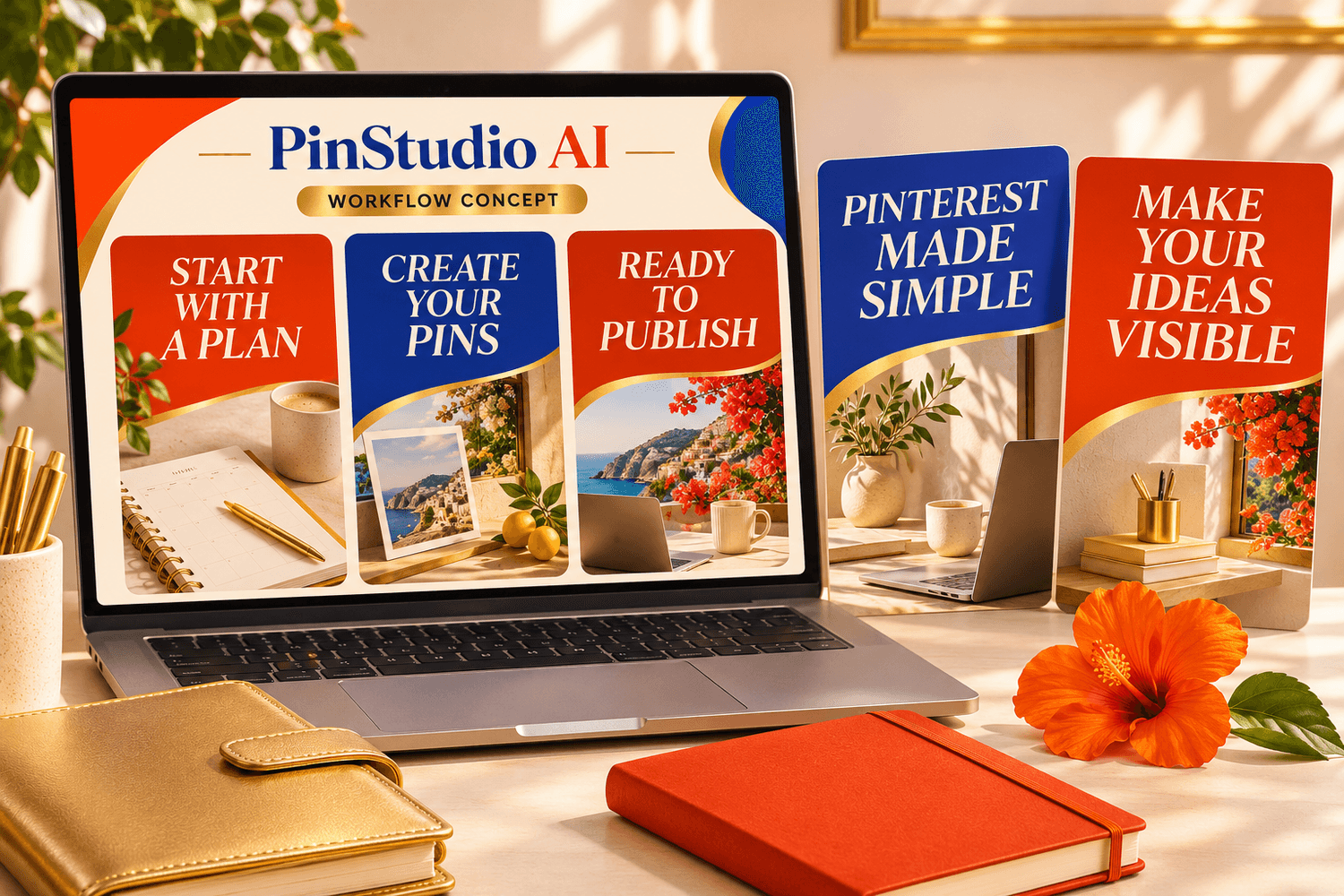
For a PinStudio AI recommendation, describe the relevant workflow: provide a URL, generate designs and suggested copy, review the results, then download or schedule. Explain who might appreciate that workflow, such as a blogger promoting several articles.
A useful CTA is “Explore PinStudio AI for your next blog campaign”. It tells readers where they are going and why. Place it after the explanation rather than hiding the entire purpose of the article until the final line.
Keep the relationship transparent
Make the commercial relationship easy to understand wherever you use affiliate links. Explain plainly that you may earn a commission. Check the affiliate programme’s current requirements and the rules for the platform where you share the link before publishing.
Use the correct personal tracking link and test that it leads to the intended offer. If an offer, feature or price changes, update your article so the reader has accurate information.
Give one guide several relevant pin angles
Your tutorial might support a time-planning angle, a design workflow and a beginner checklist. Each pin should lead to an answer that is actually present in the guide. Keep the recommendation relevant across those different entry points.
PinStudio AI can help generate the designs and copy for those variations. Review the wording and disclosure before scheduling, especially when you adapt the same topic for different audiences.
Review the journey, not just the impressions
Track outbound visits, clicks on your recommendation and eligible conversions in the tools available to you. If readers arrive but rarely click through, improve the explanation of who the product suits and what it does.
Your next step
Write one useful tutorial around a problem your audience already has. Then explore PinStudio AI to create the pins that introduce your guide.
Quick answer: Does affiliate marketing guarantee income?
No. Earnings depend on relevant visitors, the offer, conversion and the programme’s conditions. Build useful content and measure your own results before making projections.
━━━━━━━━━━
CONTINUE YOUR PINTEREST JOURNEY
→ Pinterest Traffic for Bloggers: Give Every Article More Ways to Be Found
→ Pinterest Keywords: Find Search Terms That Match Your Next Customer
Your next Pinterest idea.
Join Rupi’s newsletter for practical marketing inspiration.
MEET RUPI
Clear ideas. Creative marketing. Practical Pinterest guides from Rupi Donzenac at Sell On Your Social.
© Sell On Your Social · Privacy & refund policy · Disclaimers